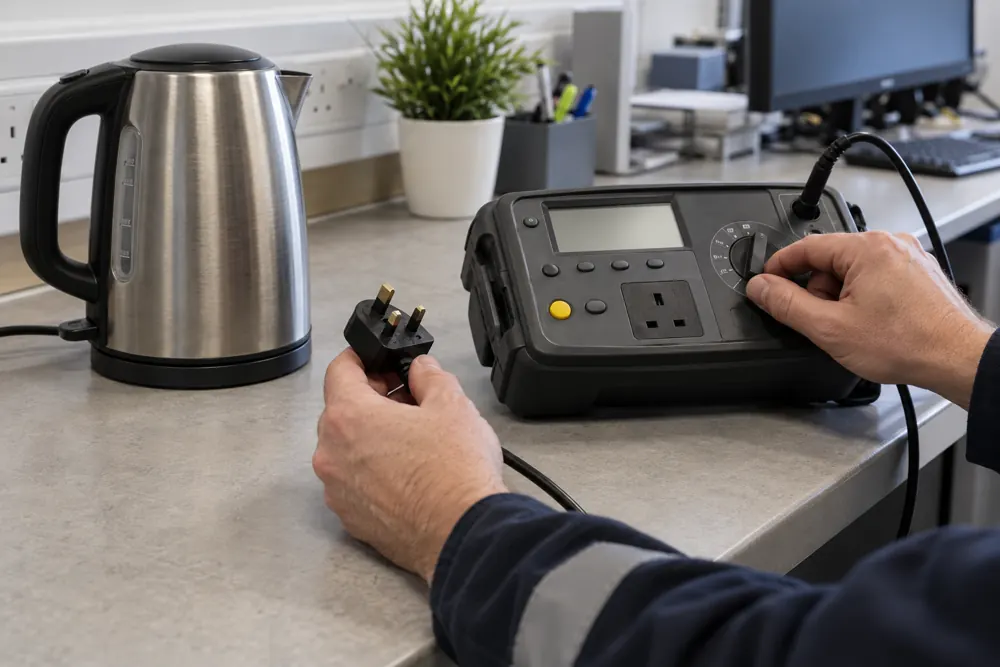
Equipment Maintenance That Fits The Workplace
PAT testing is a familiar name for portable appliance inspection and testing. The purpose is to help identify electrical equipment that may be unsafe to use. For a commercial site, the useful starting point is the equipment you have, where it is used and how it is handled.
A desk-based office, a busy workshop and a teaching space do not expose equipment to the same conditions. We help scope the checks needed for your premises rather than assume that every item needs an identical test. Your equipment list and previous records give that discussion a practical starting point.
Tell us whether you need a single visit, an updated asset register or help reviewing an existing maintenance programme. Include equipment spread across separate floors, locked rooms or several sites. Clear access arrangements can make the visit more useful and reduce the number of items recorded as unavailable.
What The Law Actually Requires
The Electricity at Work Regulations 1989 require electrical equipment that could cause injury to be maintained in a safe condition. HSE explains that the law does not demand annual PAT testing of every appliance. The right maintenance approach depends on risk, equipment use and the environment.
A formal visual inspection and an electrical test are different activities. Some items may need combined inspection and testing, while suitable lower-risk equipment may be managed differently. A dated sticker alone is not a complete maintenance system or proof that equipment will remain safe until its next check.
For work equipment, PUWER may also be relevant to wider suitability and maintenance responsibilities. Portable electrical inspection does not replace other equipment checks or operating instructions. Keep your electrical equipment programme connected to the way the premises actually manages safety.
Defining The Equipment List
Typical enquiries concern office appliances, detachable leads, extension arrangements, workshop tools and equipment used in staff areas. The item’s construction and condition influence the inspection and test method. Specialist medical, production or IT equipment may need manufacturer guidance and a separately agreed scope.
Clarify whether equipment belongs to your organisation, a tenant or a contractor. A shared workplace can contain items under several different maintenance arrangements. Agree who will make equipment available and who will receive the results before the visit begins.
An asset register helps connect findings to a specific item and location. If you already use your own asset identifiers, share the format before new labels are applied. Useful records support follow-up action and future maintenance decisions rather than creating a second incompatible list.
How A Visit Is Organised
First, prepare the estimated item count, premises layout and access contact. Identify equipment that cannot be disconnected without approval. Tell us about any manufacturer instructions, security procedures or operating constraints that affect inspection.
Next, agree the equipment categories and recording format. During the visit, items are inspected and tested as appropriate to the agreed scope. Equipment with an identified safety concern should be managed under your isolation and removal-from-use procedures, rather than left in service because a replacement is inconvenient.
Afterwards, review the results and unavailable items. Separate replacement decisions from items requiring further technical assessment. Keep the findings accessible to the person responsible for equipment maintenance so they can act on the results and update the next review date.
Avoiding Gaps In The Programme
New equipment can enter the building between planned visits, and equipment may move between departments. Give staff a clear way to report damaged leads, loose parts or signs of overheating. A planned visit is only one part of maintaining electrical equipment.
Consider how loaned equipment, contractor tools and privately supplied items used at work are handled under your workplace policy. The maintenance responsibility should be clear before equipment is put into service. Our enquiry form lets you describe those arrangements without trying to reduce the whole programme to a single item count.
Portable equipment checks are separate from fixed wire testing. If your concern is a socket circuit, a distribution board or the building’s wiring, describe that instead. We can help identify the appropriate electrical service from the symptoms and records you provide.
What Affects PAT Testing Cost
The equipment count, item types and access arrangements affect the quotation. A large number of similar accessible items may be organised differently from specialist equipment spread across restricted rooms. Existing asset records and the reporting format can also affect the work.
Ask whether the quote includes asset identification, result records and treatment of unavailable items. Explain your preferred working hours and any need to coordinate with IT support. A defined equipment list and scope are more useful than an unverified price per item.
Questions Before You Book
Straight answers to help you plan the next step.
Does Every Appliance Need PAT Testing Every Year?
PAT testing every year is not a blanket legal requirement for every appliance. The maintenance approach should reflect equipment risk, use, environment and previous findings. HSE specifically challenges the assumption that all equipment in a low-risk workplace needs annual testing. Review your programme against your actual equipment rather than rely only on sticker dates.
Does PAT Testing Include Our Building Wiring?
PAT testing concerns electrical equipment within its agreed scope, rather than the building’s fixed wiring installation. Distribution boards, circuits and installed accessories are normally considered through fixed wire inspection and testing. If you need both services, request them together and confirm that the proposal identifies the separate records and access arrangements for each.